- Period
- Gothic
- Origin
- Italian (Florentine)
- Life
- 1266/76–1337
- Practice
- Fresco and panel painting
Giotto di Bondone · 1266/76–1337
Giotto di Bondone
1266/76–1337
A Florentine painter whose solid figures and legible spaces changed how narrative could be told on a wall or a panel.
Biography
Giotto was born near Florence, probably in the later 1260s or 1270s, and was already famous in his lifetime; Dante mentions him in the Divine Comedy. His frescoes in the Arena (Scrovegni) Chapel in Padua, completed around 1305, remain the best-preserved record of his art, and the Ognissanti Madonna in the Uffizi shows his approach to the large altarpiece. In 1334 Florence appointed him master of works for the cathedral, where the campanile is still associated with his name.
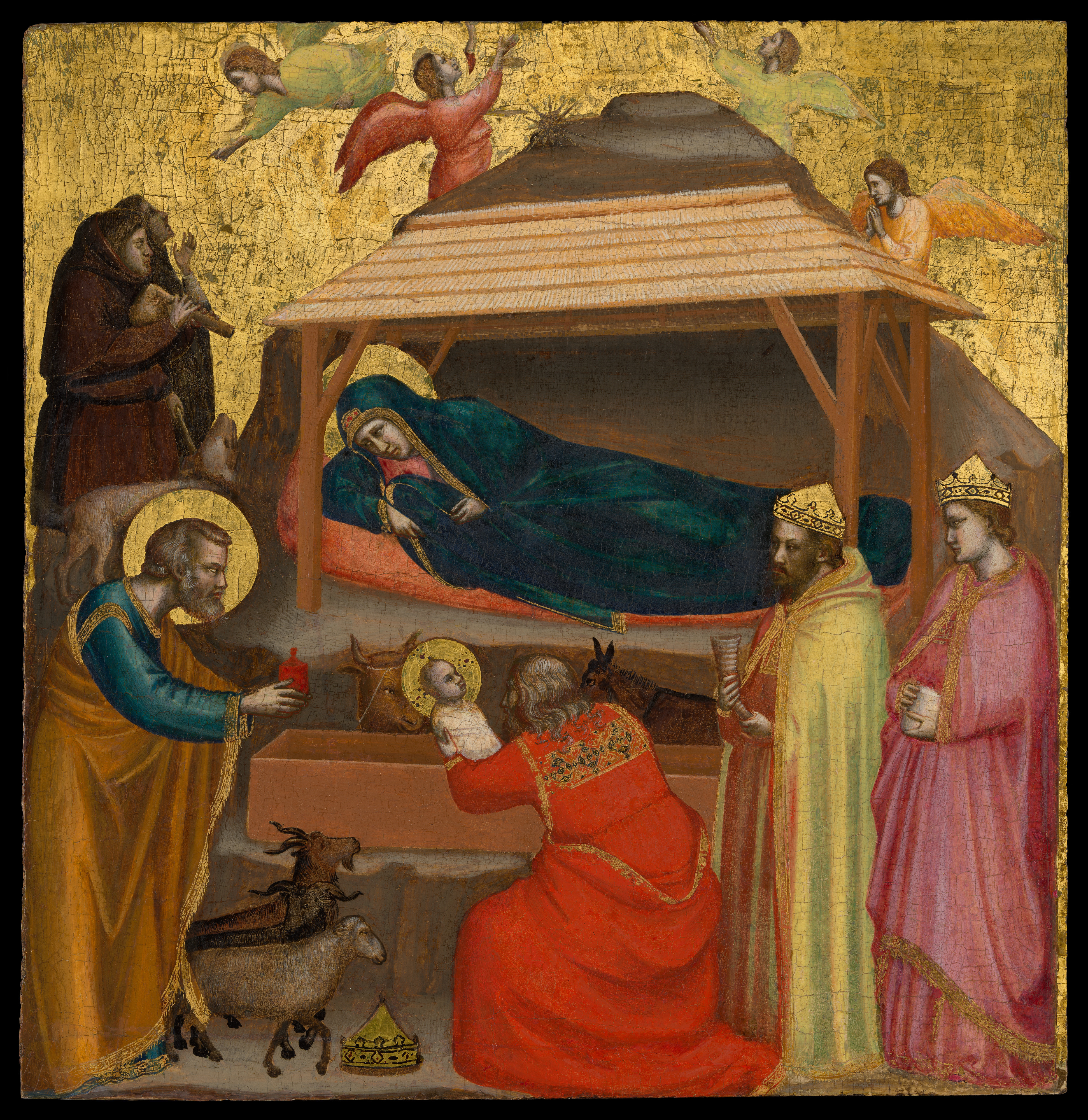
Giotto’s figures have weight and occupy believable space, and his scenes are built around a few clear gestures. Attribution of panel paintings to him personally is often disputed, since he ran a large workshop; the Met’s Adoration of the Magi, part of a series of seven scenes, has been given to Giotto himself by some scholars and to his workshop by others. His influence reached across Italy and, through later Florentine painters, into the Renaissance.
Research links
In the collection
Works to explore
1 record attributed to this maker.