- Period
- Late Gothic
- Origin
- German
- Life
- c. 1460–1531
- Practice
- Sculpture in limewood, alabaster and stone
Tilman Riemenschneider · c. 1460–1531
Tilman Riemenschneider
c. 1460–1531
A Würzburg sculptor whose unpainted limewood altarpieces and finely worked stone figures mark the last phase of Gothic carving in Germany.
Biography
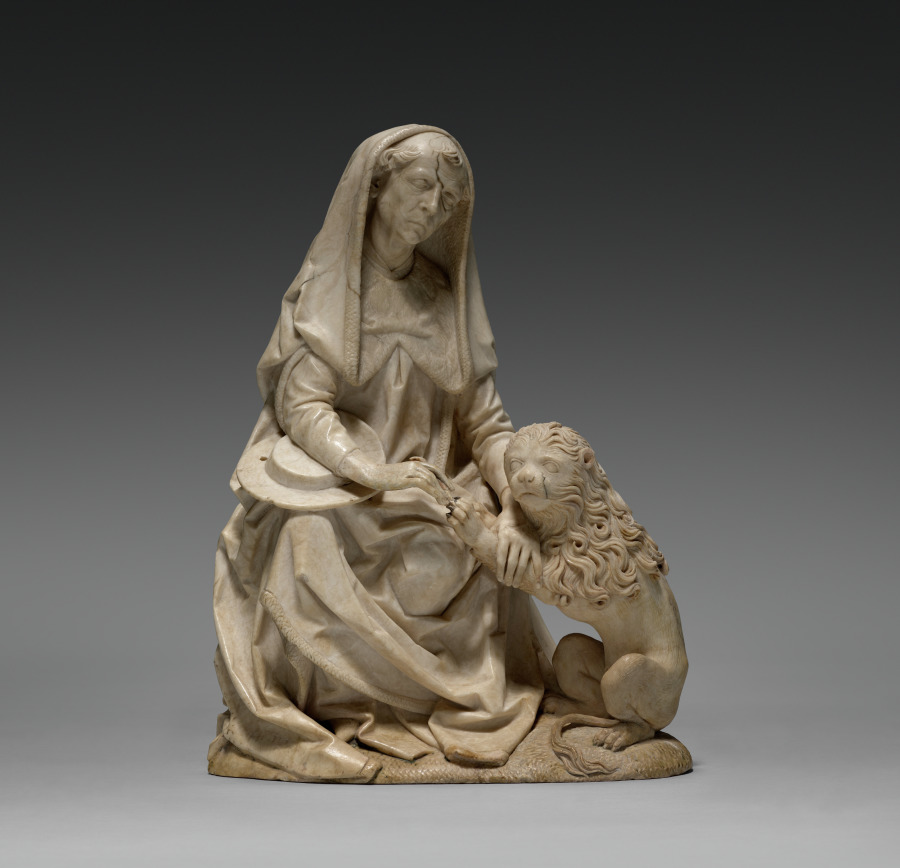
Riemenschneider was born around 1460, probably in Heiligenstadt in Thuringia, and settled in Würzburg in 1483, where he became a master in 1485 and built up one of the largest sculpture workshops in Franconia. His altarpieces at Rothenburg ob der Tauber and Creglingen are among the best known; many were left without paint, relying on the grain of the limewood and a thin glaze rather than colour. He also carved in sandstone and, more rarely, in alabaster, as in the Cleveland Saint Jerome made for a church in Erfurt.
He served on the Würzburg city council and was mayor in 1520–21, but in 1525 he sided with the townspeople during the Peasants’ War and was imprisoned and fined after its defeat. Few commissions are recorded after that date, and he died in 1531. His reputation faded until the nineteenth century, when his work was rediscovered; the quiet, inward faces of his figures are now among the most recognisable images of late Gothic Germany.
Research links
In the collection
Works to explore
1 record attributed to this maker.