- Period
- Byzantine
- Date
- c. 1425–50
- Collection
- Cleveland Museum of Art
- Object no.
- 2010.154
Icon of the Mother of God and Infant Christ (Virgin Eleousa)
Attributed to Angelos Akotantos, c. 1425–50
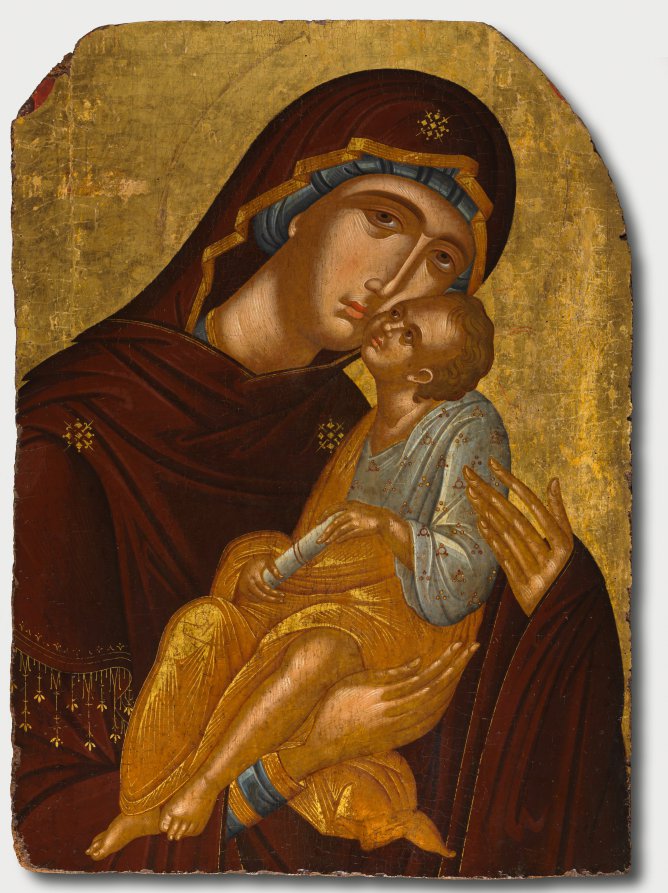
Cleveland Museum of Art · Leonard C. Hanna Jr. Fund · Public domain
- Maker
- Attributed to Angelos Akotantos
- Date
- c. 1425–50
- Medium
- Tempera and gold on wood
- Dimensions
- 96 × 70 cm (unframed)
- Period
- Byzantine
The record
Why it matters
In the Eleousa type the Virgin presses her cheek to the Child’s in an image of tenderness that also anticipates her grief. The scale of this panel suggests it hung on the iconostasis of an Orthodox church, and Cleveland attributes it to Angelos Akotantos, a painter based in Venetian-ruled Candia on Crete whose work was sought by clients in and beyond the shrinking Byzantine world. It shows the Byzantine tradition continuing, on Crete, past the fall of Constantinople in 1453.