- Period
- Late Gothic
- Date
- c. 1510
- Collection
- Cleveland Museum of Art
- Object no.
- 2011.65
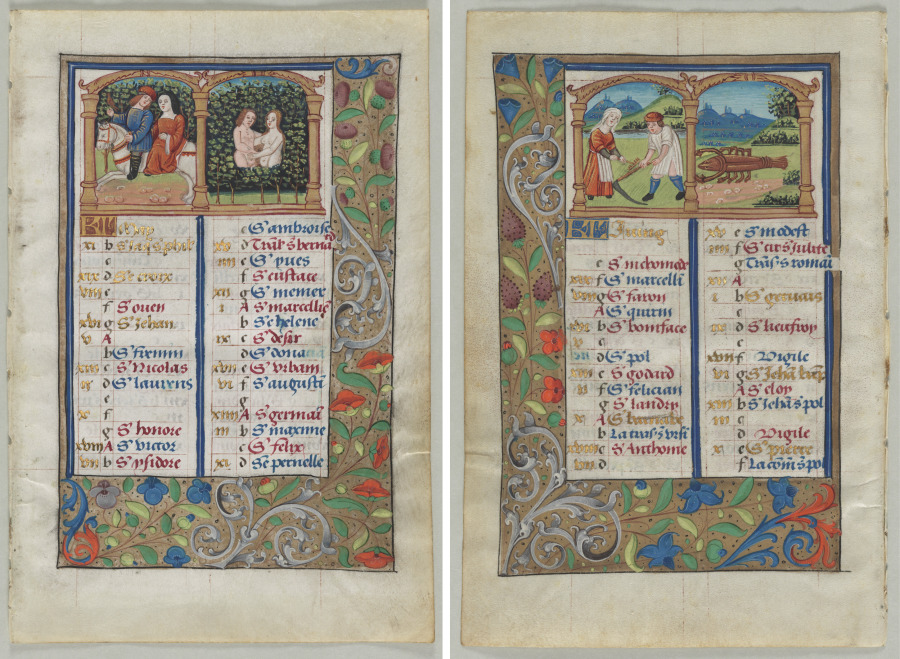
Leaf from a Book of Hours: Calendar Page for May (recto) and Calendar Page for June (verso) (2 of 3 Excised Leaves)
Unknown maker, c. 1510
Cleveland Museum of Art · The Jeanne Miles Blackburn Collection · Public domain
- Maker
- Unknown maker
- Date
- c. 1510
- Medium
- ink, tempera, and liquid gold on vellum
- Dimensions
- Leaf: 18.1 x 12.9 cm (7 1/8 x 5 1/16 in.)
- Period
- Late Gothic
The record
Why it matters
The calendar is usually located at the beginning of a book of hours. Much like calendars today, those in books of hours mark important days to be acknowledged throughout the year. These calendars are perpetual calendars, meaning adjustable, as to be accurate every year. Months are often illuminated with an image of the type of labor or zodiac sign associated with them, such as grapes in September, the month in which they were harvested. In more lavish books, the most important days are done in gold, red, or blue, while lesser days are in brown or black ink. Running along each column are letters, which would have helped readers quickly identify Sundays. Every year, a different letter would indicate Sundays. Also running along the page are golden numbers, roman numerals used to indicate full and new moons and help identify holidays like Easter that do not fall on the same date yearly.