- Period
- Gothic
- Date
- c. 1460–1500; cameo: c. 1250–1300
- Collection
- Cleveland Museum of Art
- Object no.
- 1947.508
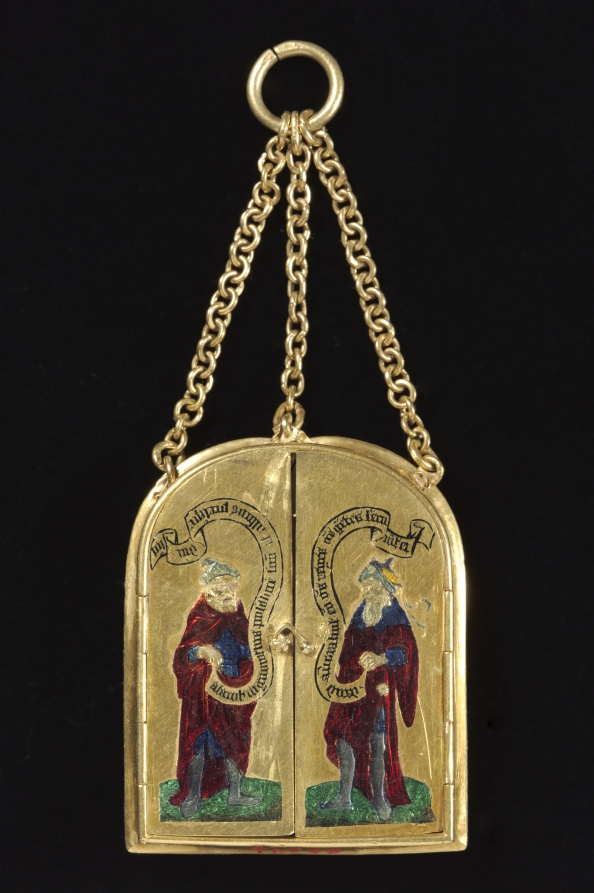
Pendant Triptych with an Onyx Cameo of the Nativity
Unknown maker, c. 1460–1500; cameo: c. 1250–1300
Cleveland Museum of Art · Purchase from the J. H. Wade Fund · Public domain
- Maker
- Unknown maker
- Date
- c. 1460–1500; cameo: c. 1250–1300
- Medium
- basse-taille enamel on gold; onyx cameo
- Dimensions
- Overall: 5.8 x 2 cm (2 5/16 x 13/16 in.); Part 1: 4.5 x 3.5 cm (1 3/4 x 1 3/8 in.)
- Period
- Gothic
The record
Why it matters
This pendant consists of colorful translucent enamel over an incised gold ground, a technique known as basse-taille , which simulates stained glass. For its owner this pendant was both for private devotion and a deluxe accessory. Made to be worn around the neck or suspended on a bed curtain, the pendant is shaped as a miniature triptych (three-panel painting) with wings or shutters that could be opened and closed. The outer surfaces are decorated with two prophets. The remaining images include various scenes from the life of Christ. Small objects played a key role in private piety. Within this domain of personal spirituality, images were used to venerate and invoke Christ and his saints, as well as to meditate on the most important mysteries of faith or events from the story of salvation. Pious men and women began outfitting rooms in their homes where "one can pray well." Small portable deluxe objects such as ivories, enamel plaques, and jeweled pendants were critical ingredients in this experience of faith.