Carving
4 materials · 5 steps
Ivory carving
Relief cut into elephant tusk for book covers, icons, caskets and mirror cases.
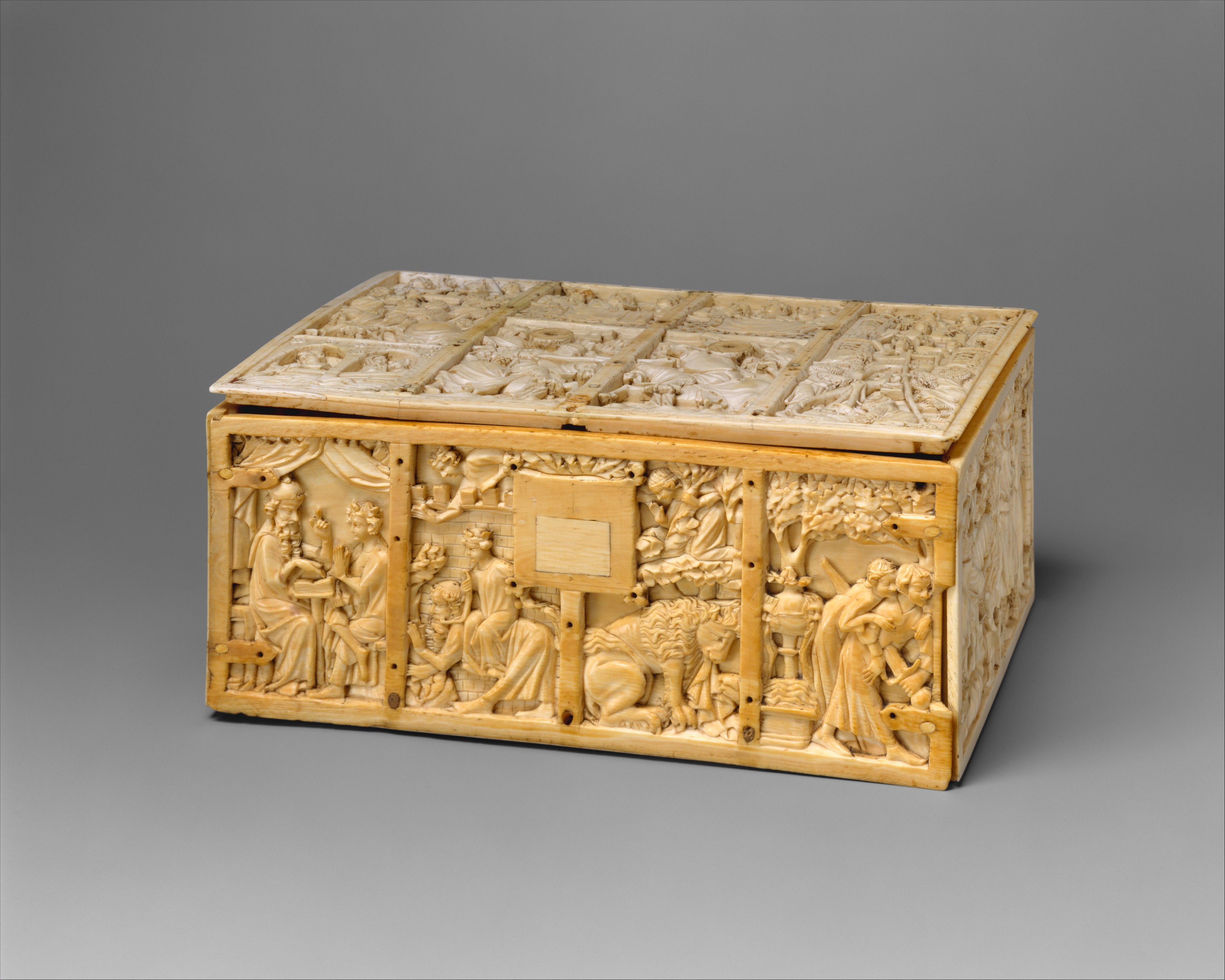
Ivory casket carved with knights and ladies in low relief
Materials & tools
- Elephant ivory
- Saws and chisels
- Gravers and files
- Paint, gilding and metal mounts
Elephant ivory reached Europe by long-distance trade and was prized for its fine grain and pale, polished surface. Carvers sawed the tusk into plaques, drew the composition, and cut the relief with chisels and gravers, sometimes piercing the ground or adding paint and gilding. The shape of the tusk limits the size of a single plaque, which is why diptychs and caskets are assembled from several pieces.
The Met: Ivory Carving in the Gothic EraThe process
Step by step
- 1
Cut a plaque from the tusk
- 2
Draw or scratch the design onto the surface
- 3
Rough out the relief
- 4
Refine figures, drapery and openwork
- 5
Polish and, where wanted, paint or mount