- Period
- Gothic
- Origin
- Italian (Sienese)
- Life
- active by 1278–died 1318
- Practice
- Panel painting
Duccio di Buoninsegna · active by 1278–died 1318
Duccio di Buoninsegna
active by 1278–died 1318
The founder of the Sienese school, who joined Byzantine gold-ground tradition to a new tenderness of gesture and expression.
Biography
Duccio is first recorded in Siena in 1278 and died there in 1318. In 1285 a Florentine confraternity commissioned from him the large Rucellai Madonna, now in the Uffizi, and between 1308 and 1311 he painted the double-sided Maestà for the high altar of Siena Cathedral, a work carried to the cathedral in a civic procession. Most of its panels remain in Siena, though several narrative scenes are dispersed among other collections.
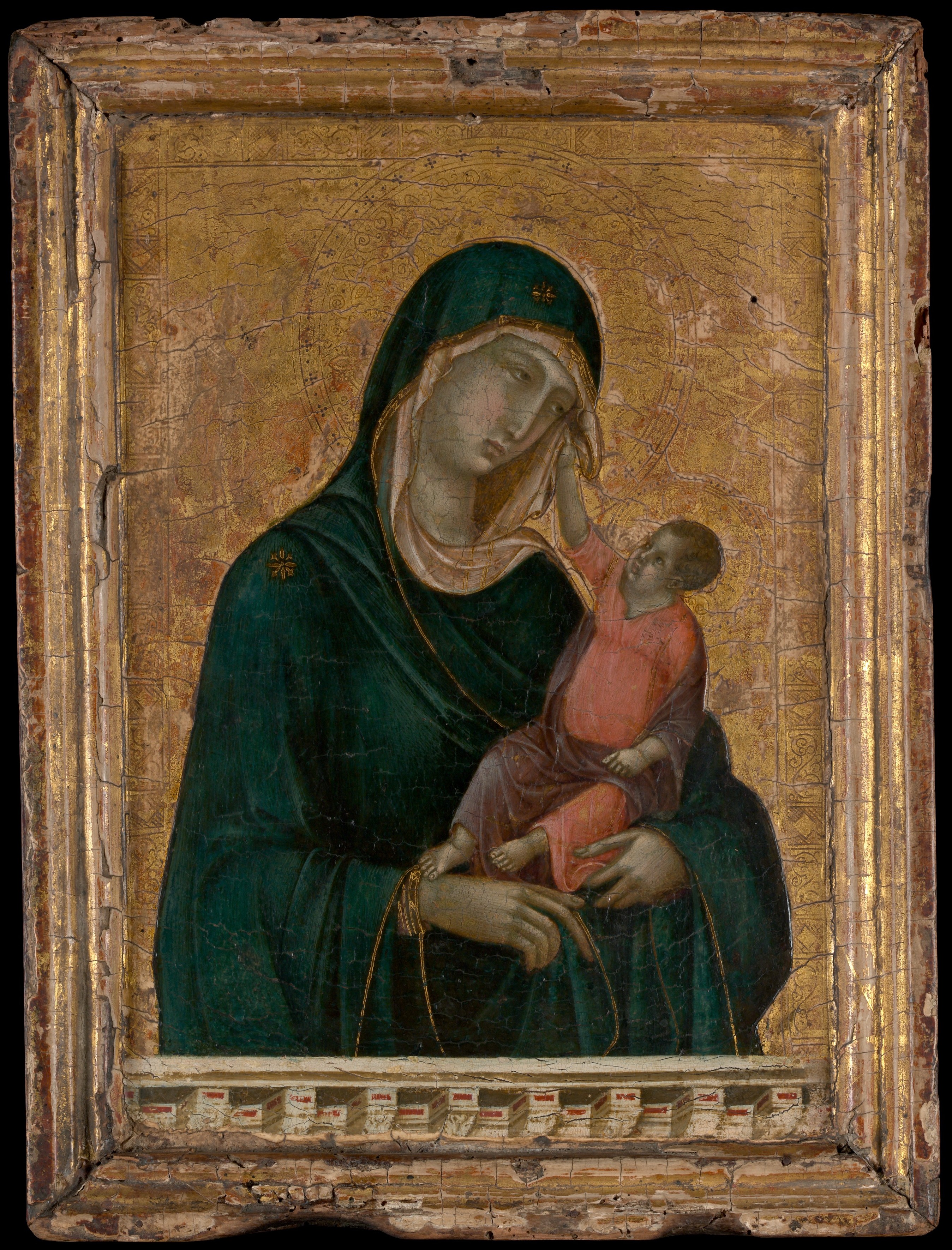
His painting keeps the gold grounds and formal types of Byzantine icons while softening them with flowing drapery, subtle colour and an attention to human feeling. The small Madonna and Child in the Met, probably painted for private devotion, shows this on an intimate scale. His pupils and followers, including Simone Martini and the Lorenzetti brothers, made Siena one of the leading centres of European painting in the fourteenth century.
Research links
In the collection
Works to explore
1 record attributed to this maker.